


The mountains have a way of making us slow down, breathe deeper and appreciate every step. And if you are planning your first Kedarnath trek, that “every step” matters more than you might think.
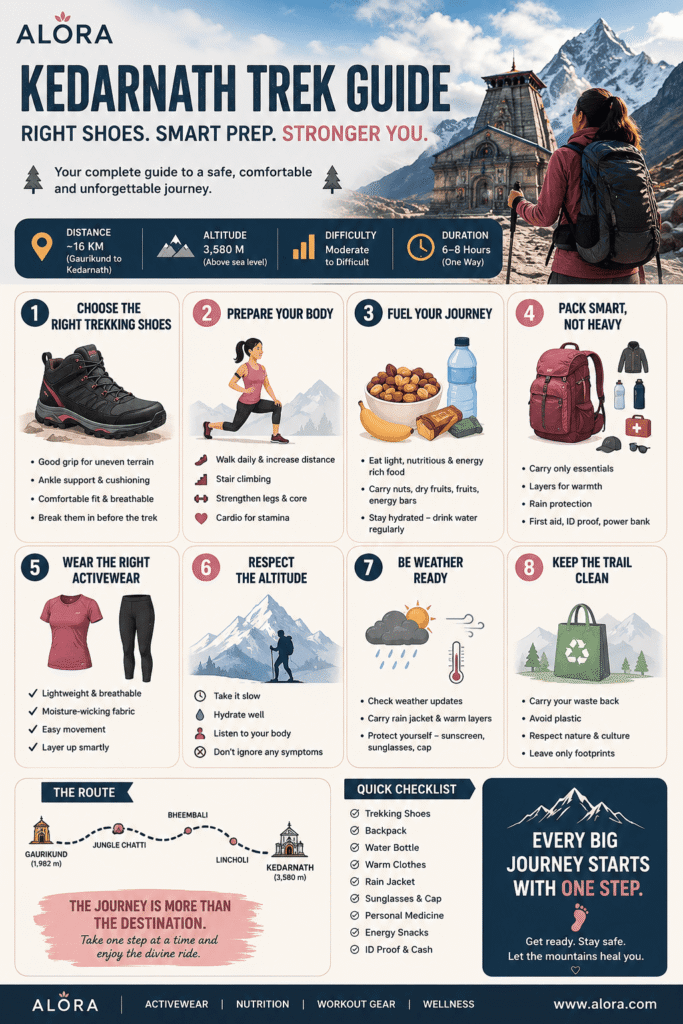
Kedarnath is not simply a destination—it is a spiritual journey combined with a demanding Himalayan walk. The official Uttarakhand Tourism Board describes the route from Gaurikund to Kedarnath as a medium-to-steep trek, with Kedarnath situated at around 3,580 metres above sea level.
For first-time trekkers, preparation can make the experience much more comfortable. From choosing the right trekking shoes to building your stamina and carrying the right essentials, here is a practical guide to getting ready.
1.Why Your Trekking Shoes Matter
One of the biggest mistakes beginners make is treating trekking shoes like regular sports shoes.
The Kedarnath route involves long hours of walking, uneven surfaces, inclines and changing weather conditions. The official tourism information describes the trail as a medium-to-steep trek.
Your shoes should therefore provide:
- Good grip on uneven surfaces
- Comfortable cushioning
- Proper ankle and foot support
- A secure fit
- Breathability
- Durable construction
Avoid wearing brand-new shoes for the first time on the trek. Wear them during training walks beforehand so your feet can adjust and you can identify any discomfort early.
The golden rule: comfort first, style second.
2. Choose Shoes According to the Trail
When shopping for trekking shoes, don’t simply choose the pair that looks the coolest.
Look for a sole designed to provide traction and stability. A reasonably firm outsole can help you feel more secure on uneven terrain.
Your shoes should also fit properly. There should be enough room for your toes to move without your heel slipping excessively.
For Indian trekkers preparing for Kedarnath, a mid-ankle trekking shoe with good grip and cushioning can be a practical option.
And remember—your socks matter too. Choose comfortable, moisture-managing trekking socks instead of everyday cotton socks if possible.
3. Prepare Your Body Before the Trek
You don’t need to become an athlete overnight.
Instead, start preparing several weeks before your journey.
Include activities such as:
Walking: Start with comfortable distances and gradually increase them.
Stair climbing: Useful for getting your legs accustomed to climbing.
Squats and lunges: Help build lower-body strength.
Core exercises: A stronger core can help with stability and posture.
Cardio: Brisk walking, cycling or similar activities can help improve endurance.
The goal isn’t to exhaust yourself during training. The goal is to gradually make your body comfortable with longer periods of movement.
4. Don’t Forget Hydration & Nutrition
A long trek requires energy.
Keep yourself hydrated and carry water according to your travel plan. Your food choices should provide a combination of carbohydrates, protein and healthy fats.
Simple travel-friendly options can include:
- Nuts and seeds
- Bananas or other fruit
- Energy bars
- Dry fruits
- Peanut butter sandwiches
- Electrolyte drinks, when appropriate
Avoid experimenting with completely unfamiliar foods immediately before or during the trek.
Your body should have enough fuel to keep moving—but don’t turn your backpack into a mini grocery store either.
5. Pack Smart, Not Heavy
A common beginner mistake is carrying everything “just in case.”
For a trekking trip, every extra kilogram eventually feels heavier.
Your essentials can include:
- Trekking shoes
- Comfortable activewear
- Warm layers
- Rain protection
- Water bottle
- Personal medication
- Sunglasses
- Sunscreen
- Basic first-aid supplies
- Necessary identification and travel documents
- Phone and power bank
Check the latest local requirements and travel advisories before leaving.
For the pilgrimage itself, official registration information is available through the Uttarakhand government’s Tourist Care portal.
6. Activewear Makes a Difference
Your clothing should help you move rather than restrict you.
Choose lightweight, comfortable layers that allow easy movement. Depending on the weather, you may need to layer clothing rather than rely on one thick outfit.
For women, supportive activewear can make long walks more comfortable. For men, lightweight moisture-managing T-shirts and flexible trekking bottoms can be useful.
The idea is simple:
Move comfortably. Stay protected. Layer intelligently.
7. Don’t Underestimate the Altitude
Kedarnath is located at a high altitude of approximately 3,580 metres.
That means the trek can feel considerably more demanding than a normal city walk.
Take your time. Don’t feel pressured to match someone else’s pace. Take appropriate breaks, stay hydrated and listen to your body.
If you experience concerning symptoms, seek appropriate medical assistance rather than trying to push through them.
Fitness is not about proving that you can suffer the most.
It’s about knowing when to keep going—and when to pause.
8. Respect the Mountain
Kedarnath is both a major pilgrimage destination and a Himalayan environment.
Keep the trail clean. Carry your waste until you find an appropriate disposal point. Avoid damaging plants or disturbing wildlife.
Also remember that weather and local conditions can change. Always check current official information before travelling rather than relying only on old social-media posts.
Uttarakhand Tourism also provides official information about Kedarnath and pilgrimage registration.
9. Build Your Trekking Kit with ALORA
Your fitness journey doesn’t have to start when you reach the mountains.
It starts with the small choices you make before the journey.
At ALORA, the idea is simple: make fitness more accessible, practical and inspiring for everyday India.
Whether you’re preparing for a Himalayan trek, starting your gym routine or simply trying to become more active, the right combination of activewear, workout essentials, nutrition and fitness gear can help you stay prepared.
Because your gear shouldn’t just look good.
It should help you move better.
10. The Journey Is Bigger Than the Destination
A Kedarnath trek can challenge your stamina, patience and mindset.
There will be moments when your legs feel tired. There will be steep sections. There may be weather changes. But there will also be moments when you look around at the mountains and realise why you started.
So don’t wait until the week before your trip to think about fitness.
Start walking today.
Choose your trekking shoes carefully. Train gradually. Eat well. Stay hydrated. Pack smart. Respect the mountain.
And most importantly, remember:
Every big journey starts with one step.
Your Kedarnath journey starts long before Gaurikund. It starts with the first step you take today.